
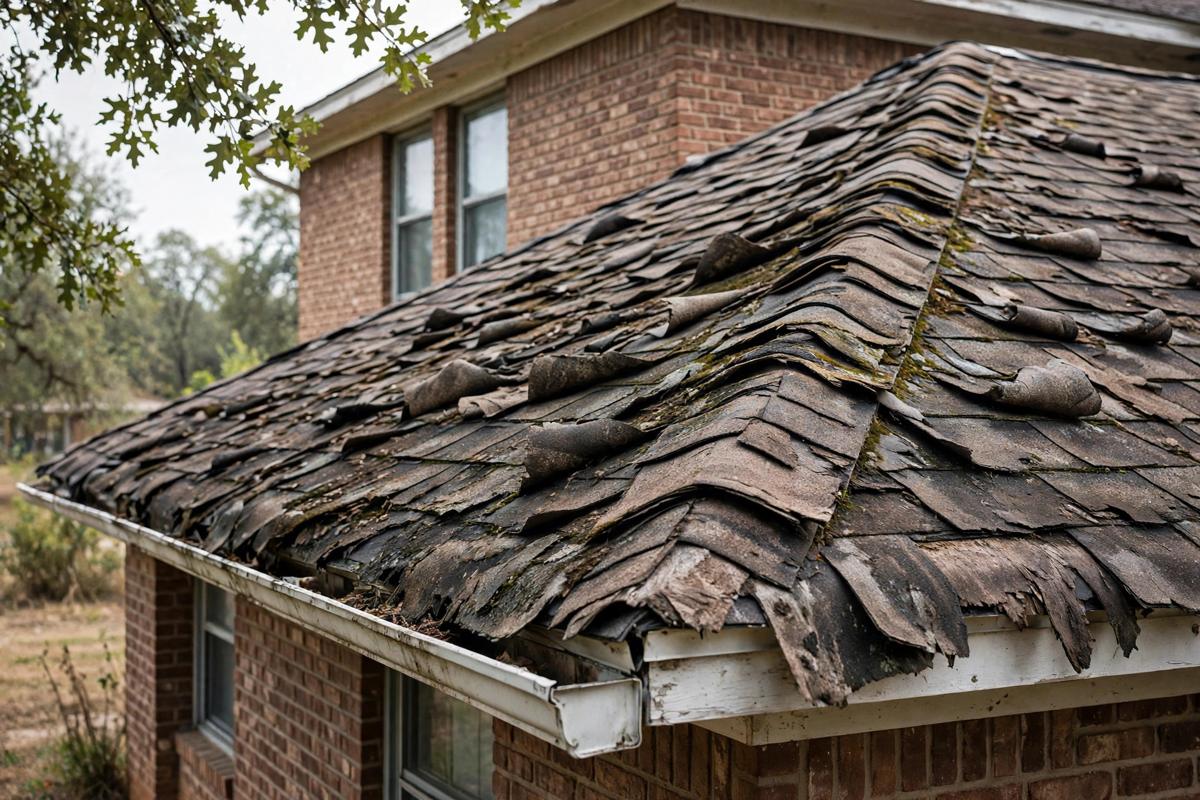
Quick answer: Ceiling stains, missing or curling shingles, granules in gutters and soft spots are all worth a closer look. Many can be spotted from the ground or the attic without climbing.
Signs you can spot from inside
- Ceiling or wall stains, bubbling or peeling paint. Moisture is getting in. The stain may not be under the source. See causes of roof leaks.
- Daylight, damp insulation or a musty smell in the attic. Light through the deck means a gap. Damp insulation points to a slow leak.
- Leaks that only show up in wind-driven rain. These usually come from flashing, a vent or a roof edge that sheds water fine in calm weather.
Signs you can spot from the yard
- Missing, lifted or creased shingles. Shingles in the yard after wind are a clear sign.
- Curling, cupping or cracked shingles. Common on aging roofs and a sign of widespread wear.
- Granules in gutters or at the downspout. Some granule loss is normal on new roofs. Large amounts, or bare spots on shingles, suggest wear or hail.
- Damaged or rusted flashing and cracked pipe boots. Small parts, big leaks.
- Dark streaks, moss or algae. In humid East Texas, streaks are often cosmetic, but moss can lift shingles and hold moisture.
- Sagging or soft spots. A dip or spongy feel can mean damaged decking and should be inspected soon.
- Age. If your roof is at or near the end of its expected life, a proactive inspection costs less than an emergency. See old roof replacement.
What to do
- Active leak or sagging: treat it as urgent. See emergency roof repair.
- After a storm: follow our storm checklist.
- Everything else: schedule a roof inspection and ask for photos and written findings.
Do not climb a roof to check. Binoculars, a phone zoom and an attic flashlight give you a lot without the risk.
Educational overview, not a quote, insurance advice or a professional inspection.
Related: Roof Inspection Roof Repair Roof Repair vs. Roof Replacement