
1. Put safety first
Stay off the roof. Wet, damaged roofs are slippery and may not hold weight. Keep away from downed power lines, and if water is coming through a ceiling light fixture, turn off that circuit at the breaker.
2. Document from the ground
Take dated photos and video of the roof, gutters, fascia, vents, window screens, siding, fences, AC condenser fins and anything else that looks hit. Soft-metal dents on vents and gutters help show that hail actually fell at your address. Note the date of the storm.
3. Know what storm damage looks like
- Hail: dark spots where granules were knocked off, a bruised or soft feel, cracked mats, dented vents and flashing. Hail around an inch or larger is commonly cited as the point where shingle damage becomes likely, but smaller hail can damage old, brittle shingles.
- Wind: missing shingles, creased or lifted tabs, torn flashing, shingles in the yard.
- Debris: limbs and pine cones can puncture or crack shingles and leave soft spots.
4. Stop further damage
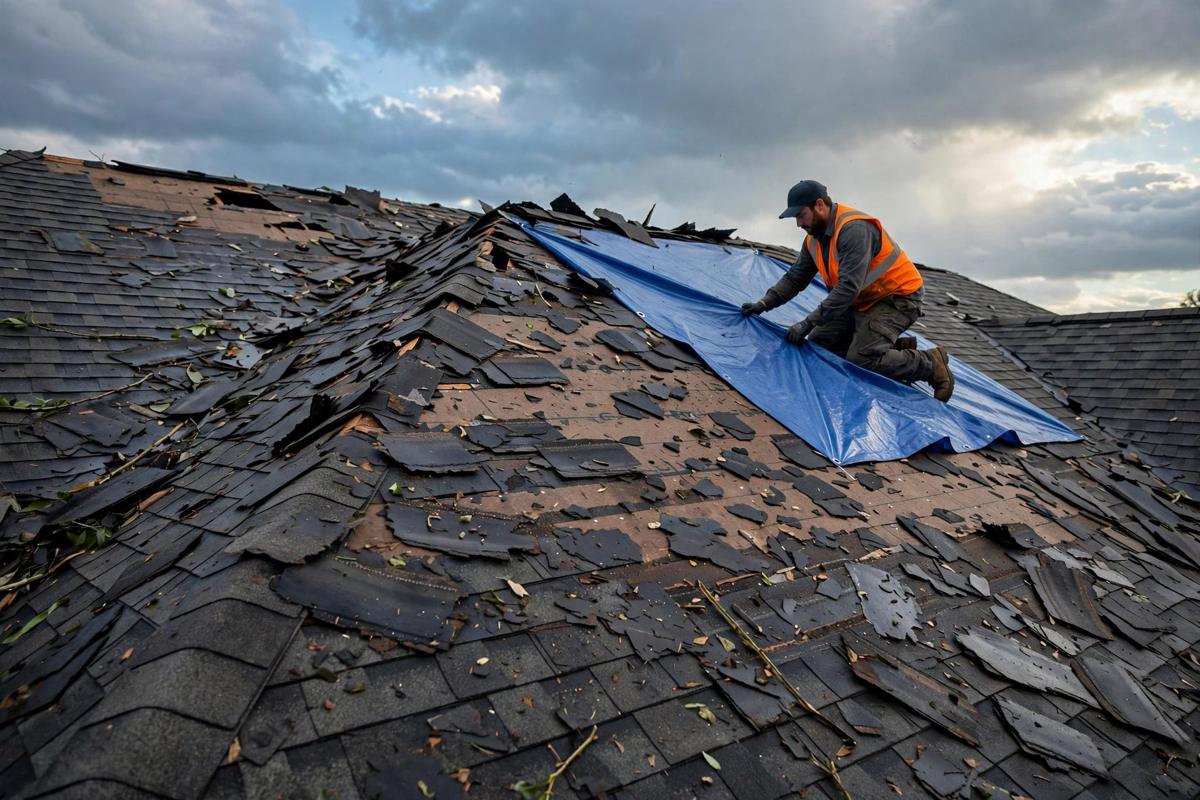
If water is getting in, arrange emergency tarping or temporary repairs. Most policies expect you to take reasonable steps to prevent more damage. Keep receipts and photos. See emergency roof repair.
5. Report the loss
Read your policy for the wind and hail deductible and the reporting deadline, then contact your insurer promptly. Your insurer decides coverage. A roofer cannot guarantee a claim will be approved. More in our Texas claim guide.
6. Get a written inspection
Ask for an inspection with photos and written findings that cover every slope, the flashing and the vents. Hidden damage often shows up weeks later as a leak, so do not skip this because the roof looks fine from the yard.
7. Be careful what you sign
Door-knockers often appear after storms. Before signing any contract, work authorization or paperwork that assigns your claim rights, read it fully and compare it against other estimates. Never agree to a plan that depends on the contractor covering your deductible. Texas law restricts that.
8. Decide between repair and replacement
Damage on a single slope may be repairable. Widespread damage usually is not. Use the factors in repair vs. replacement, then see storm damage roof repair or hail-damaged roof replacement.
Educational overview, not a quote, insurance advice or a professional inspection.
Related: Storm Damage Roof Repair Hail Damaged Roof Replacement Roof Inspection