
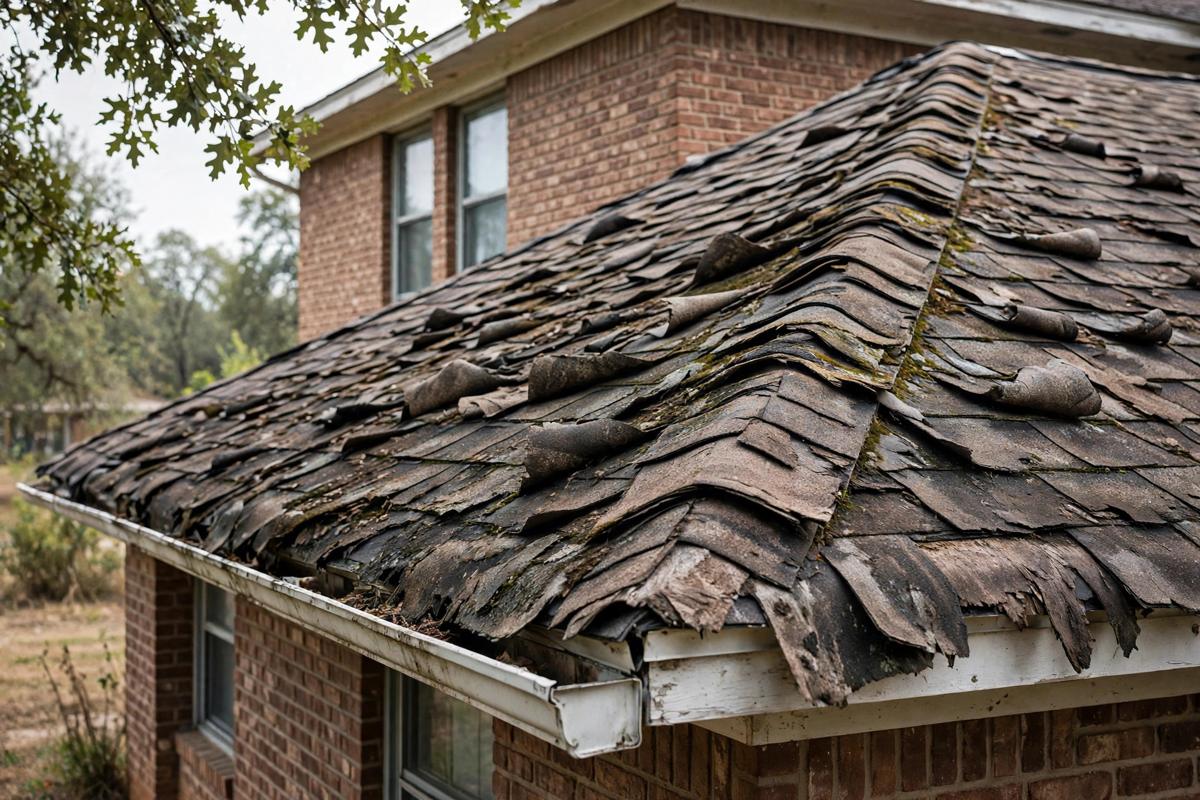
Typical roof lifespans by material
Manufacturers rate materials under test conditions, and East Texas weather is not a test lab. Use these ranges as planning numbers, not promises:
- 3-tab asphalt shingles: about 15 to 20 years
- Architectural asphalt shingles: about 20 to 30 years
- Metal roofing: about 40 to 70 years
- Clay and concrete tile: 50 years or more, with underlayment replaced sooner
- Flat and low-slope membranes: about 15 to 25 years depending on the system
What shortens a roof's life in Huntsville
Heat is the slow enemy. Summer attic temperatures bake shingles from below, dry out the asphalt and loosen granules, especially when ventilation is weak. Hail and storm winds do sudden damage on top of that, and pine debris holds moisture against the surface between storms. A roof that would last 25 years in a mild climate may be tired at 18 to 20 here.
Installation quality matters as much as material. Poor nailing patterns, skipped flashing details and inadequate ventilation are behind many early failures we are asked to look at.
Signs the end is near, whatever the age
Watch for curling or cracked shingles across whole slopes, granules filling the gutters, repeated leaks in different places, and soft or sagging decking. One symptom is a repair conversation. Three or more usually mean replacement planning, as our roof warning signs guide explains.
Related: Roof Replacement in Huntsville, TX Roof Repair or Replacement Metal Roof Replacement