
Covered damage vs. worn-out roofs
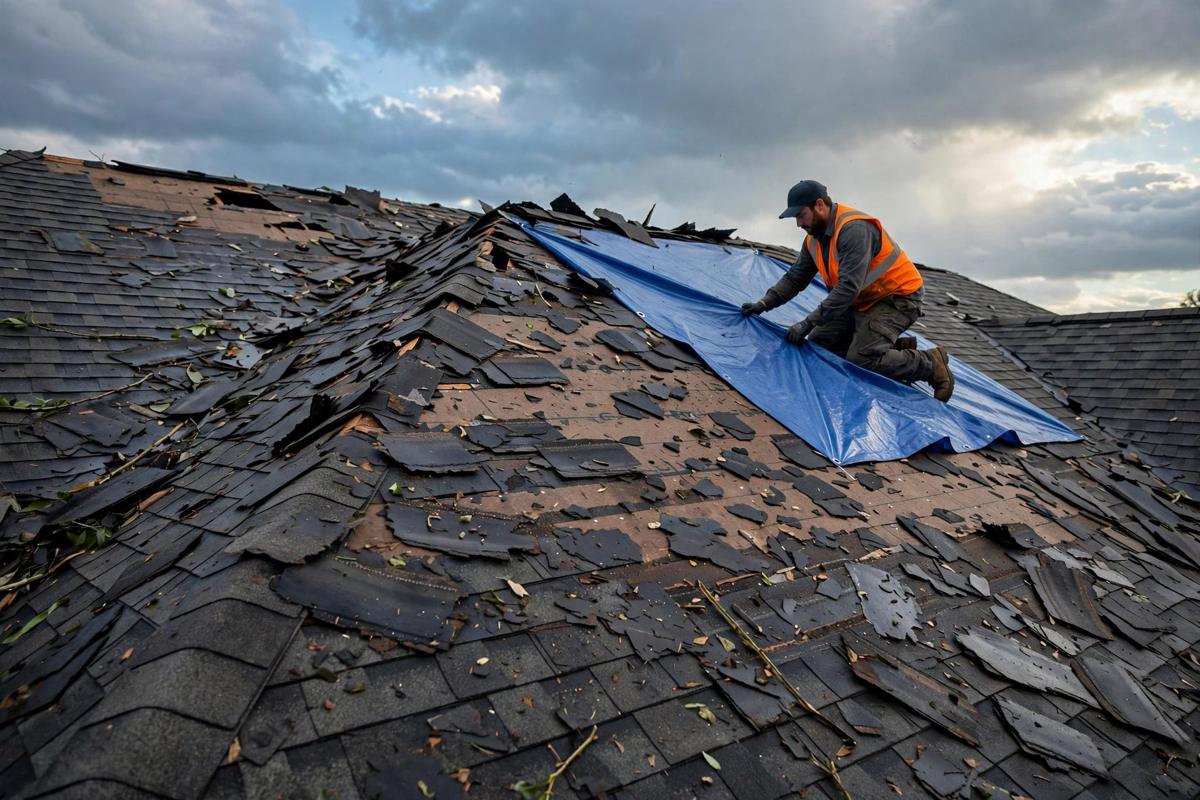
Insurers pay for damage from a covered peril: hail impacts, wind-lifted or missing shingles, a tree limb through the deck. They do not pay because shingles reached the end of their life, and they may limit payment on older roofs. That is why documenting a storm date and getting a professional assessment early matters, as our insurance claims guide explains.
RCV, ACV and your deductible
A replacement cost (RCV) policy pays the cost of a comparable new roof, minus your deductible, once work is done. An actual cash value (ACV) policy pays the depreciated value, which on an older roof can leave a large gap. Texas wind and hail deductibles are often a percentage of the home's insured value, not a flat amount, so check your declarations page before assuming the math works.
Steps after storm damage
- Protect the home from further leaks and keep receipts
- Photograph damage from the ground and note the storm date
- Get a roofer's documented assessment before filing, so you know the damage is real
- File the claim, meet the adjuster, and compare their scope with your written estimate
Start with what to do after hail or storm damage for the full first-days checklist.
Related: Roof Inspection Roof Insurance Claims in Texas Storm Damage Roof Repair