
Quick answer: Protect people and electrics first, contain the water, photograph everything, stay off the roof, and call for temporary protection. Do not rely on a DIY patch.
Right now: contain it
- Safety first. If water is dripping through a ceiling light or fixture, switch off that circuit at the breaker. Stay out from under a bulging, sagging ceiling.
- Catch the water. Use buckets or tubs, and put plastic over furniture and floors. Move valuables out of the way.
- Photograph and film. Capture the stain, drips and any damaged rooms. Date everything.
- Check the attic if it is safe. Wet insulation, dark wood or a drip path helps point toward the source. Stay on the framing and do not step between joists.
- Stay off the roof. Wet shingles are slippery and a falling roofer is not an emergency you need.
Then: call for temporary protection
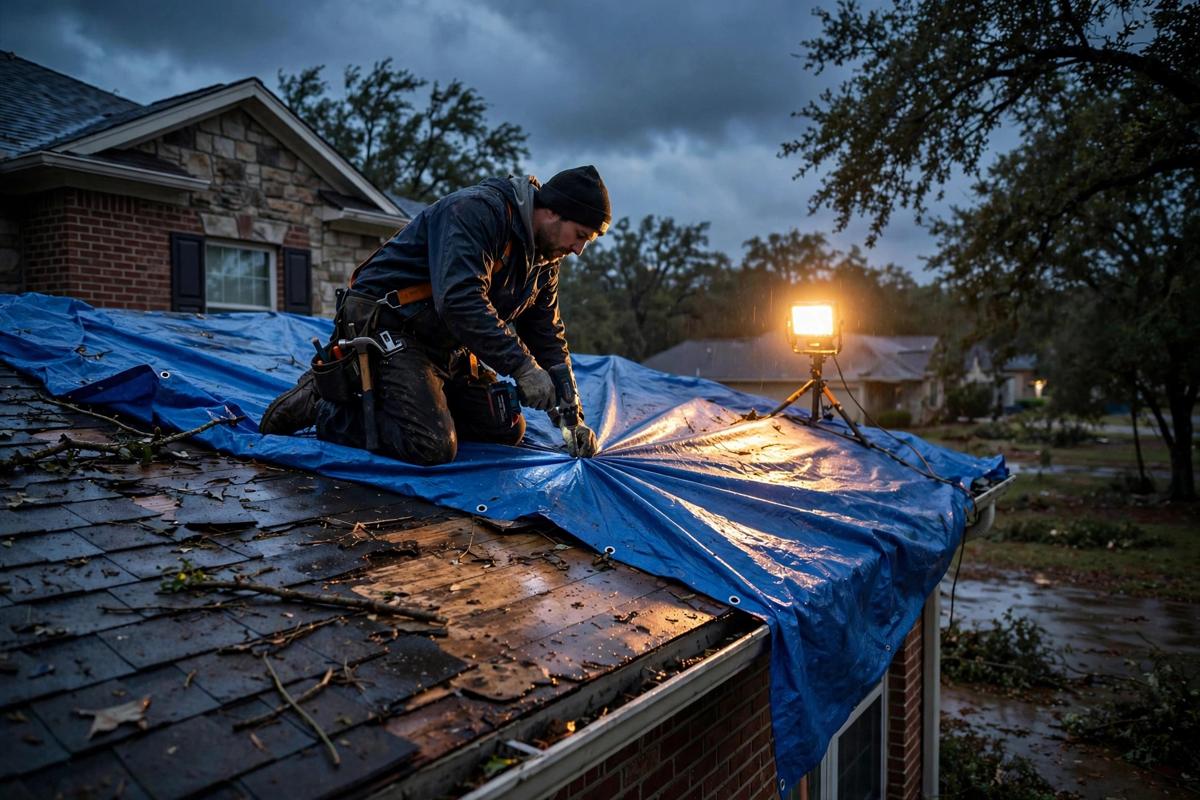
An emergency roof tarp or temporary patch can hold until a permanent repair is possible. See emergency roof repair. When you call, have these ready:
- When the leak started and what the weather was doing
- Where inside you see water
- Roof type and approximate age
- Photos of the ceiling and any visible roof damage
What to avoid
- Do not smear roofing cement over a guess. A DIY patch can trap water and hide the real source.
- Do not climb up in the rain or in high wind.
- Do not ignore a small leak. Persistent moisture can lead to mold within a few days and softens decking over time.
- Do not agree to a big job under pressure. Stop the water first, then compare estimates.
If a storm caused it
Report the loss to your insurer and keep receipts for temporary repairs. Policies typically cover sudden damage and exclude long-term neglect, so documentation of when the leak began matters. See our Texas claim guide.
Find the real cause
Once the water is under control, have the source traced and repaired. Read common causes of roof leaks or go straight to roof leak repair.
Educational overview, not a quote, insurance advice or a professional inspection.
Related: Emergency Roof Repair Roof Leak Repair Common Causes of Roof Leaks