
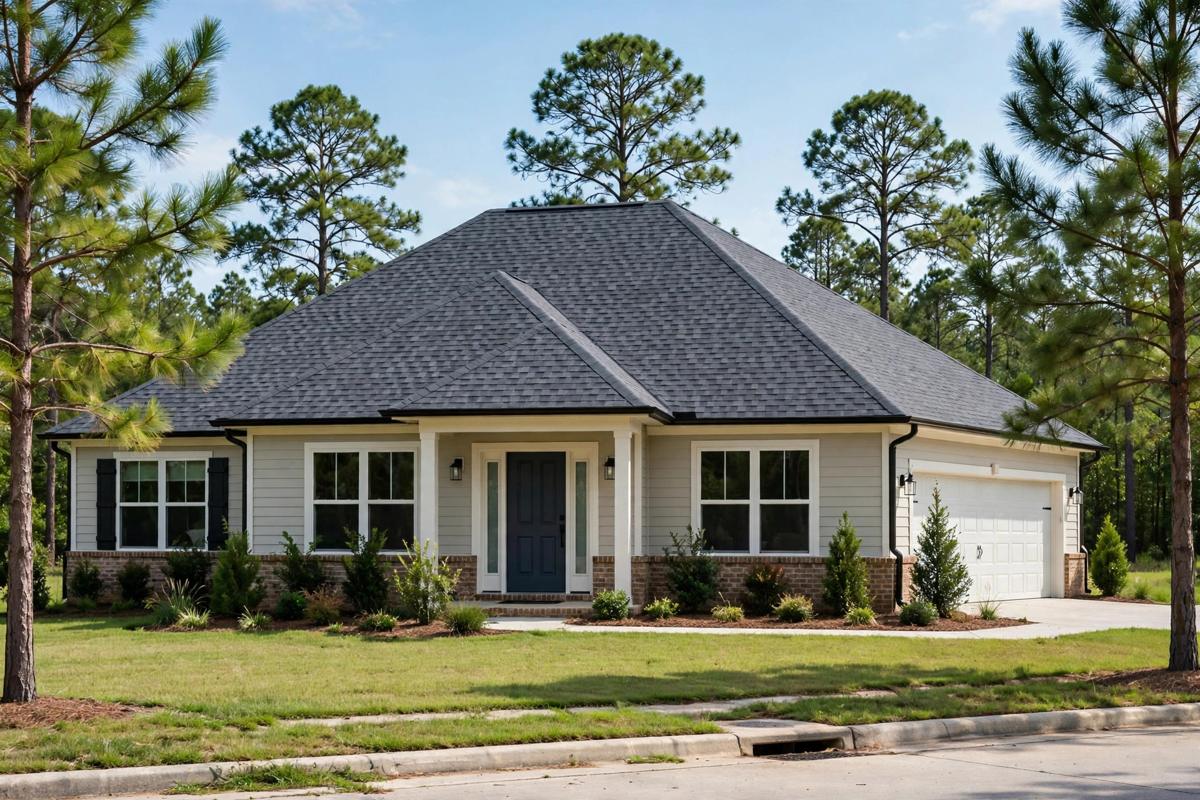
Shingles: the outer layer
Asphalt shingles are the part you see, and their job is to shed water by overlap: each course laps over the one below so rain runs down and off, not in. Granules on the surface protect the asphalt from sun, and when granules wash into the gutters in quantity, the shingles are wearing thin. In Huntsville, three-tab and architectural shingles are the common choices; see asphalt shingle roof replacement for shingle types, underlayment and ventilation in more detail.
Underlayment: the backup layer
Underlayment sits on the deck, underneath the shingles, as a second water barrier. It matters most where water lingers or is driven: valleys, eaves and around penetrations. If shingles are damaged or lifted, underlayment is what stands between the next rain and the deck. Under metal, the underlayment needs to be rated for the heat that builds up under panels; under shingles, it needs to stay intact across the whole deck, not just the easy slopes.
Flashing: where roofs leak most
Flashing is the metal (and sometimes membrane) that seals every joint and transition: chimneys, vents, skylights, walls and valleys. Most leaks start here, not in the middle of a shingle field, because joints move, sealants age, and flashing that dried out and cracked lets water past. That is why roof leak repair starts by tracing flashing, pipe boots and valleys, and why our common causes of roof leaks guide spends most of its time on joints.
Ventilation: moving heat and moisture out
Ventilation is a loop: intake air low at the soffits, hot air out high at the peak. In a Huntsville summer that loop protects shingles from heat building up in the attic, and in humid weather it moves moisture out before it condenses on the deck. When the loop stalls, attic heat bakes shingles from below and cooling bills climb. See attic ventilation in Texas heat for how the loop works and the signs it is weak.
How the parts handle Huntsville weather
Heat and humidity wear the system down gradually: granule loss, dried flashing, damp shaded slopes. Heavy rain tests overlap, flashing and drainage all at once. Wind lifts tabs and bends flashing, and hail bruises shingles and dents vents; after either, storm damage roof repair explains what a repair visit covers. Pine debris is the slow test: needles and leaves hold moisture against shingles and clog valleys, which is why clearing and inspections belong in the same routine as repair. See pine needles on your roof for what buildup does.
When one part fails
A stain on the ceiling rarely sits under the failed part, because water travels along decking and rafters before it drips through. That is why an inspection photographs the whole roof, flashing, vents and valleys, and the attic side of the deck, and reports findings in writing. If you are not sure which part is failing, ask for a roof inspection before deciding between roof repair and roof replacement: the system view is what keeps a small fix from becoming a repeat leak.
Related: Roof Inspection Roof Leak Repair Attic Ventilation in Texas Heat Metal Roof vs Asphalt Shingles